The Anatomy of an Edit: What Actually Happens When You Hand Us Your Footage

You know that specific flavour of existential dread? The one where you're staring at a hard drive heavy enough to anchor a small boat, packed to the brim with raw footage, and zero idea what happens next? You've already done the hard yards: you wrote the brief, wrangled the talent, survived the shoot, and actually captured the thing. That's no small feat. But now the footage is sitting in the too-hard basket, quietly judging you, while the deadline aggressively creeps closer.
This is one of our favourite points in a project to step into, because this is where the actual craft lives. Sifting through a mountain of raw takes to find the story inside them is, as far as we're concerned, one of the more satisfying things you can do with a timeline and a good cup of coffee.
Here's an honest look at how we do it.
Before a Single Cut Gets Made
First things first: we watch everything. Every strong take, every awkward stumble, every time someone forgot their line and the camera kept rolling anyway. The full picture gets reviewed before anything touches the timeline, because the edit only comes together naturally when you understand the raw material from every angle.
Think of it like cutting marble for a statue: the story is already in the footage, and the job is to subtract from that larger block until you find it.
On average, one hour of raw footage yields about fifteen minutes of usable cuts, and those cuts get sorted and categorised by theme, room, or person (depending on the type of video we're putting together) so that by the time the actual assembly begins, the decisions feel instinctive rather than arbitrary. The sorting shapes the story long before the edit begins, and that groundwork is what makes everything downstream move faster and more confidently.
Those usable cuts don't disappear into our project files, either. We can package them up as functional b-roll for your next campaign, or send them over as a reference check so you can see exactly what we've been working with and why certain choices were made throughout the process. When the revision stage arrives, that kind of transparency makes the conversation considerably more productive for everyone.
Before the footage is sorted, we sit down together. In person or via video call is our preference, because a bit of face time does things that an email chain simply can't (nuance, mostly, but also the kind of creative trust that makes a collaboration actually work). That call gives us the chance to properly understand what this video needs to achieve, which is sometimes a different question from what the brief says it should, and those two things aren't always the same. The call ends with clear action points, and everything, the brief, its amendments, any notes, goes into our central project management software so nothing lives in a thread somewhere.
From there, we either pitch ideas to push the piece further, or follow your creative direction precisely. Both are valid. The call is where we work out which one fits.
What Post-Production Actually Covers
If you're searching for video editing services in Melbourne, you're probably thinking about the cut, the assembly, clips chopped together to music. And yes, that's the core of it. But post-production covers considerably more ground than most people realise until they're standing in the middle of it, and understanding the full scope upfront tends to save a lot of back-and-forth later.
We're talking colour grading, sound design, motion graphics, captioning, social media cutdowns. Everything required to take a rough assembly and get it to a finished, publish-ready deliverable. And if a project has a specific need that falls outside our team's own capabilities, we have an extensive network of freelancers we can bring in, and we manage that process as part of the overall delivery.
The project stays ours to see through, regardless of who's working on what.
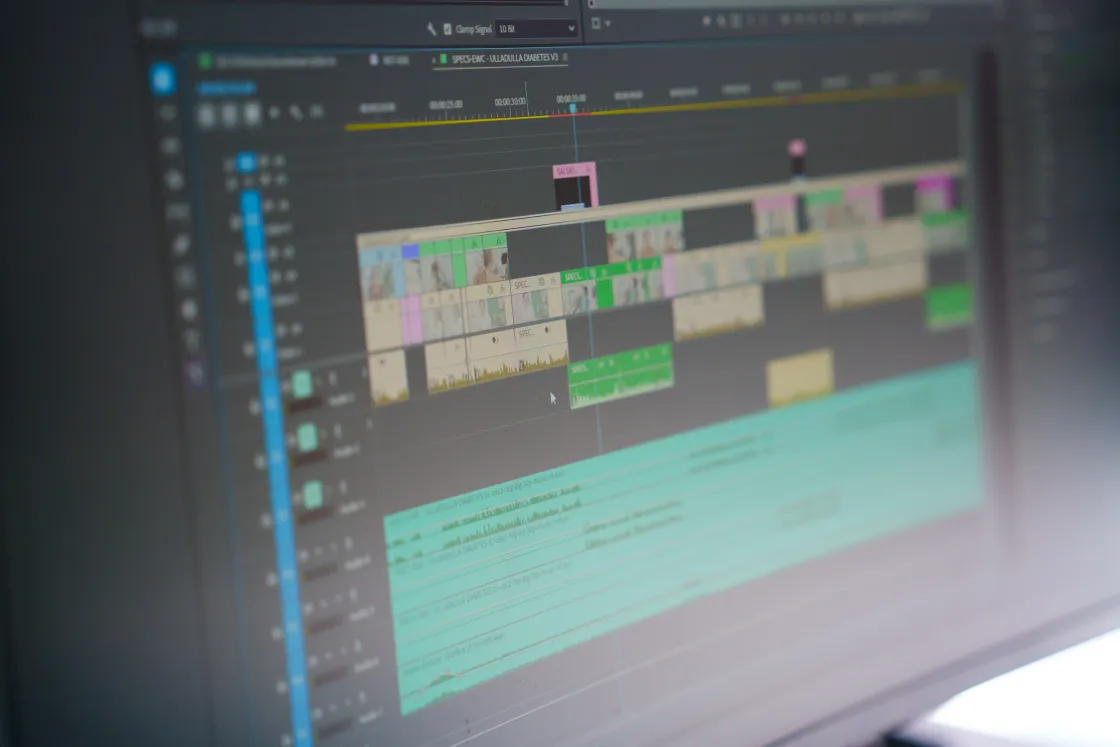
The revision process itself is iterative, with a check-in at each stage so you always know where the project stands and always have the chance to weigh in before the next phase begins. First assembly to fine cut to final delivery, with your input shaping each step along the way.
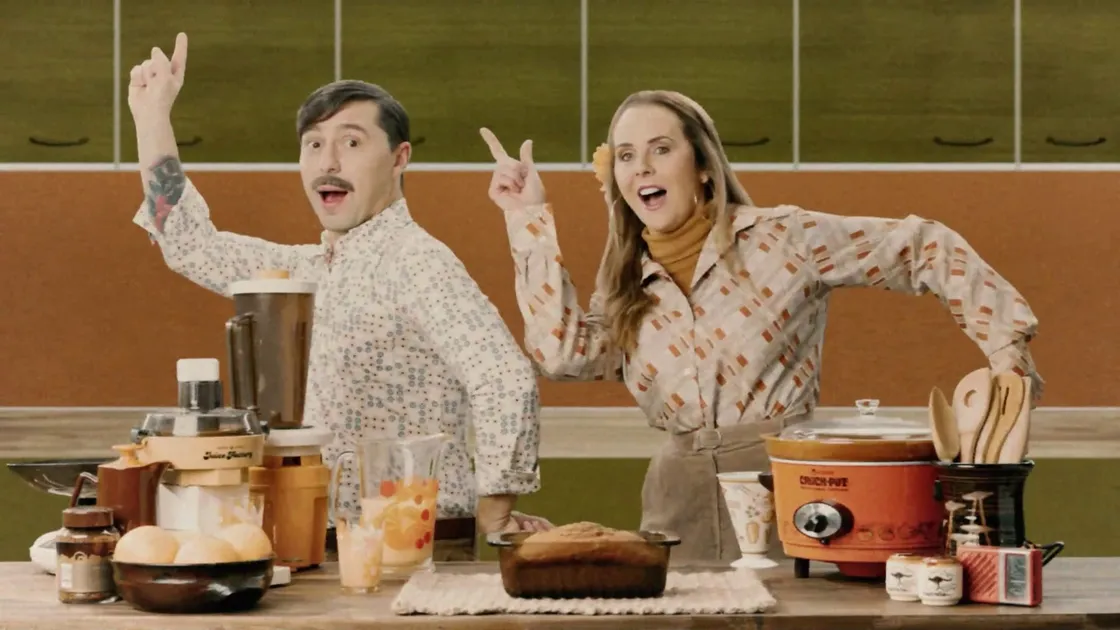
Our 15 Year Retrospective for Specsavers is a good example of what this process looks like when it has proper room to breathe. A clear brief, a pre-production approval process, iterative feedback at every stage, and a team that knew exactly what they were building toward.
 Play Specsavers - 15 Year Retrospective
The Honest Truth About Tight Deadlines
Here's the thing about tight deadlines: they're doable, but there's a better way.
A major retail client came to us mid-project with a half-finished working file that needed to be ready for a large event. Nothing was labelled, the timelines looked like digital spaghetti, and the first stretch of the job was spent simply figuring out what each element in the project actually did, pulling at threads to see where they led. We ended up rebuilding the entire project from scratch, using their script as a guide on what to visualise.
Overtime was worked, coffee was consumed at a concerning rate, and we delivered on time. The client was happy, and it was a good result under pretty difficult circumstances.
So if you come to us with a tight window, we're not going to laugh you out of the room.
That said, the Specsavers job, with actual lead time and a proper pre-production phase?
That project ruled.
When an editor has the time to step away, come back with fresh eyes, and let an idea develop across revisions, the final cut reflects that. When everyone is sprinting against a ticking clock, the final cut reflects that too. Both scenarios are real. One just involves considerably fewer stress-induced grey hairs.
The toughest version of an edit-only job is the one where the footage is self-shot over several months, the brief reads like a cryptic haiku, and the person holding the budget can't answer questions mid-edit because they weren't close enough to the detail themselves. In that situation, the editor is working on instinct alone, throwing a hail-mary and hoping they've read the room correctly.
It's a solvable problem, and the solution is a solid brief and a proper onboarding call, both of which are built into our process from day one.
Breathing room is a gift you give yourself, your editor, and the final cut. If you've got a hard drive gathering dust and you're ready to do something with it, grab a same-day quote or book a discovery chat.
We'll work through it together.