How Many Cameras Do I Need to Film an Interview?
In Short
- For a conversational or prestige interview, our default is two to three cameras. Each has one job.
- Ask what each camera is for. If the production company can't say, ask for a price without it.
- If your room is tight, a locked wide plus a tighter angle works, and one camera is the fallback.
- If your brief says "cinematic", two operators are justified. Ask for cameras and operators on separate lines.
Most people treat the number of cameras as a quality dial. One camera feels like the budget option, and four feels like a proper film.
That instinct hides what the number really changes. It sets how much of your person's time the crew uses, and what the editor can cut between.
By an interview, we mean one or two people answering questions on camera: a customer, a staff member or a leader. Here's how to read the number of cameras for yours, and what to ask so the quote matches.
Cameras Mostly Save Your Person's Time
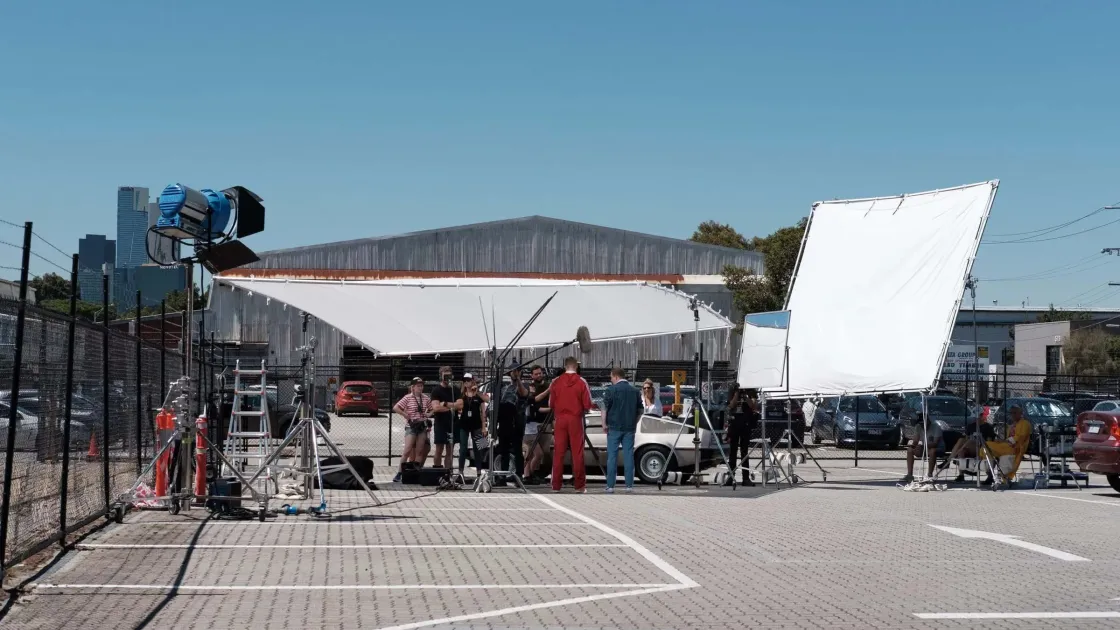
Several cameras keep filming through the conversation, so the crew doesn't stop and reset between angles. They also let one operator move ahead to set the next spot while another keeps shooting. Your person stays in the flow of the answer, and gets back to work sooner.
Where do the cameras go? Mostly in one room. Pick the room that shows the place best and do the main interview there. Add a short setup in another room only if it earns its place. Other rooms become B-roll under the person's voice.
Short on time with your person? Choose a sit-down over a walk and talk. Planning around a short window is in how do I plan a shoot around a subject who only has an hour.
Know What Each Camera Is For
For a conversational or prestige interview, our default is two to three cameras, and each has one job. Setups vary by job, so treat this as a starting point.
| Camera | Its job | What you get |
|---|---|---|
| Wide, locked off | An anchor for the whole interview | A frame your speaker can always return to |
| Second angle, locked | A locked angle at about 45 degrees | A second view to cut to |
| Roaming close-up | Moves in on the speaker | Smiles and gestures as they happen |
Got a nervous speaker? Ask for a familiar face behind the wide camera. Tell your speaker to ignore the roaming cameras. The wide camera gives them somewhere to look. The rest of the preparation is in how do I get a nervous person comfortable on camera.
Is your room tight? Ask for a locked wide plus a tighter angle. For two people in conversation, that's a wide of both and a tighter shot. If space is really tight, one camera is the fallback.
Ask What Each Camera Adds
A good production company plans to what the job needs, and says so when it needs less.
Ask what each camera will be used for. They should be able to name the shot the editor will cut to. If they can't, ask them to price the job without that camera.
Planning several videos from the same interviews? Say so before the day. The crew then films with each video in mind. How to plan them is in how do I get more out of one video shoot.
Read the Quote for Cameras
Each camera operator is a crew role, so a second operator is a line of its own. Ours are priced by role, and our starting prices leave out bigger crews. Our rates are on video production costs.
Ask the quote to list cameras and operators separately. Then you can see what each one adds.
Brief says "cinematic"? Two operators are justified. The word covers a lot. Tell the production company what you picture, and ask what the second operator would add.
Ask for dates early. Our shoots are usually booked about two weeks ahead, and the edit takes about ten business days, including revisions. The closest page on our site to see the work is corporate video.